
ADHD Symptoms in Women: Why It Looks Different and Gets Missed for Years
- June 16, 2026
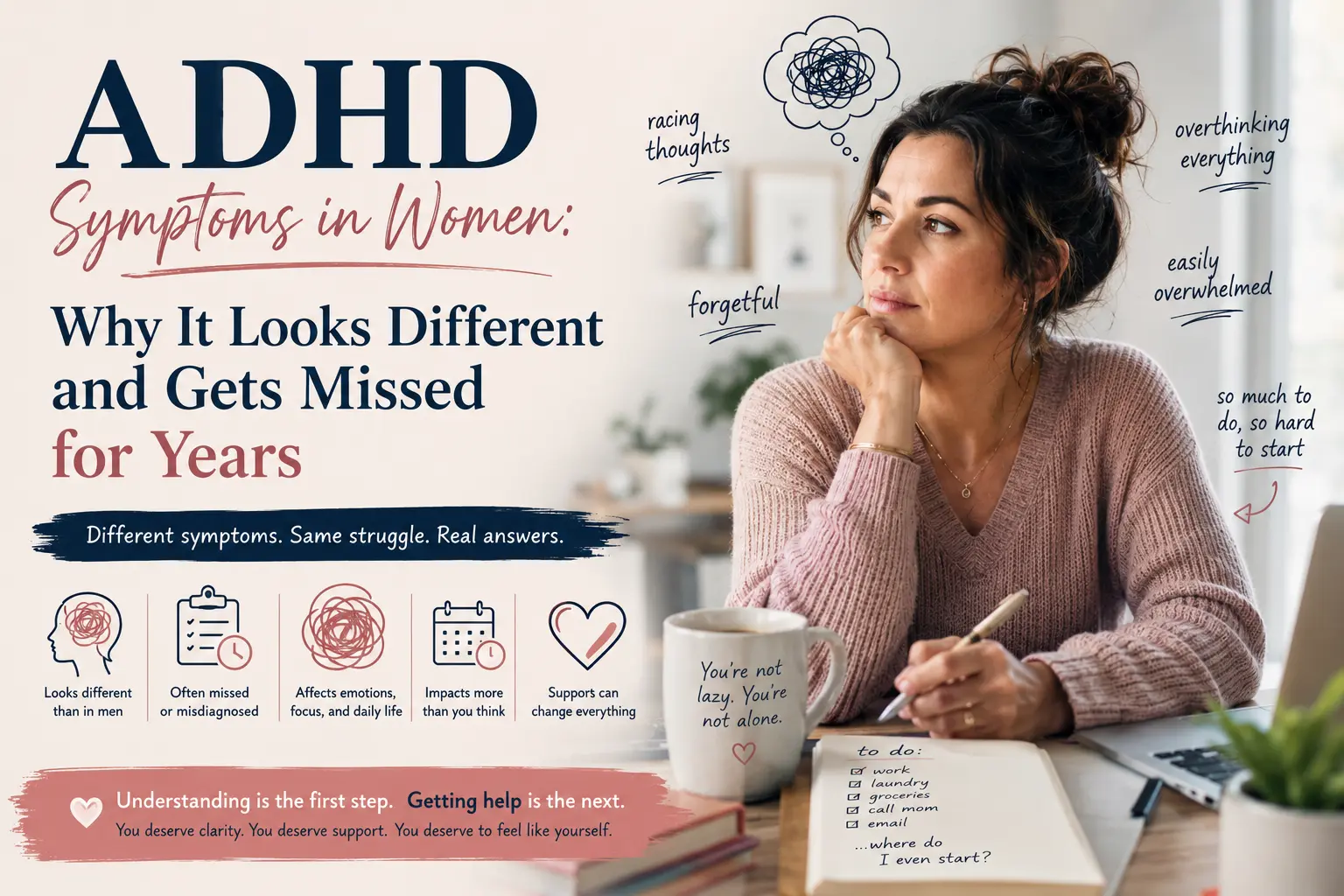
Imagine spending your entire adult life feeling like you are failing at things everyone else handles without a second thought. You forget appointments. You lose track of time. You start ten tasks and finish none of them. You have been told you are smart, yet something always seems to go wrong. Therapists have suggested anxiety. Doctors have prescribed antidepressants. You have tried to be more organized, more disciplined, more focused, but the effort is exhausting and the results never last.
Then, at 38, or 44, or 52, someone finally suggests ADHD. And suddenly, everything makes sense.
This is not a rare story. It is the story of hundreds of thousands of adult women with undiagnosed ADHD whose symptoms were missed, misread, or misattributed for years. Research consistently shows that girls and women are far less likely to receive an accurate ADHD diagnosis compared to boys and men, not because ADHD is less common in women, but because it looks different. An estimated 14% of adults remain undiagnosed with ADHD, and women are disproportionately represented in that number.
This article covers exactly why ADHD symptoms in women present differently, what those symptoms actually look like, why undiagnosed ADHD in adult women goes undetected for so long, and what to do if any of this sounds familiar. If you are in San Antonio, Castle Hills, New Braunfels, or El Paso, TX, the adult ADHD specialists at Psychiatry of SA are here to help.
Why ADHD Looks Different in Women Than in Men
The modern understanding of ADHD was largely built on research conducted on boys. For decades, studies focused on hyperactive, disruptive children in classroom settings, and the diagnostic criteria that emerged reflected that population. Boys with ADHD tend to show obvious, external symptoms: running in hallways, interrupting class, acting before thinking. These behaviors get noticed, reported, and lead to referrals and assessments.
Girls and women with ADHD, in the overwhelming majority of cases, do not present that way.
Inattentive vs. Hyperactive Presentation
ADHD has three recognized subtypes: predominantly inattentive, predominantly hyperactive-impulsive, and combined. Research published in the Journal of Attention Disorders found that girls are more often diagnosed with the inattentive subtype, characterized by distraction, disorganization, and forgetfulness. Boys more frequently present with the hyperactive-impulsive subtype, which produces louder, more disruptive behaviors that get referred for evaluation. Inattentive ADHD is quieter. A girl who is daydreaming in class is easy to miss, easy to label as a slow learner, a dreamer, or simply not trying hard enough.
Internal Hyperactivity: The Symptom Nobody Talks About
Women with ADHD are not typically running around the room. Their hyperactivity lives inside their heads. It is a constant, exhausting stream of thoughts jumping from one topic to another, a mental restlessness that never fully quiets. This internal hyperactivity is one of the most commonly overlooked ADHD symptoms in women because it is invisible from the outside. Instead, it is frequently mistaken for anxiety, worry, or being “high-strung.”
Masking and Compensating: The Invisible Coping Layer
By the time many women reach adulthood, they have spent years building elaborate coping systems, color-coded calendars, excessive list-making, relying on reminders for every task, and pushing through sheer willpower to meet expectations. This process, called masking, is exhausting and unsustainable. It often leads to burnout, low self-esteem, and a growing sense of inadequacy. Masking is a primary reason why ADHD in adult women so often goes unrecognized: even the woman herself may not recognize that her daily struggles reflect a neurological difference, not a personal failing.
14 ADHD Symptoms in Women That Are Commonly Missed
ADHD in women does not always look like the textbook description. Below are the most frequently overlooked and misattributed signs of ADHD in adult women. If several of these feel deeply familiar, it may be time to consider a formal ADHD evaluation.
- Chronic disorganization despite genuine effort — Constantly losing keys, missing deadlines, or living in clutter even when you desperately want things to be ordered.
- Difficulty starting tasks (task initiation paralysis) — Knowing exactly what you need to do but being completely unable to begin, often waiting until the pressure of a deadline forces action.
- Hyperfocus on interesting topics — Becoming so absorbed in something engaging that hours pass unnoticed, making it hard to switch tasks or meet other obligations.
- Emotional dysregulation and rejection sensitivity — Intense emotional reactions to perceived criticism or rejection (sometimes called Rejection Sensitive Dysphoria), sudden mood swings, and difficulty managing frustration.
- Chronic forgetfulness — Forgetting conversations, appointments, obligations, or where items were placed — even moments after encountering them.
- Racing, restless thoughts (internal hyperactivity) — A mental “motor” that runs constantly, making it difficult to relax, sleep, or stay present in conversations.
- Time blindness — A consistent inability to accurately perceive how long tasks take, leading to chronic lateness despite best intentions.
- Interrupted sleep and insomnia — Difficulty falling asleep because the mind will not quiet down, or waking in the night with racing thoughts.
- Low frustration tolerance — Becoming easily overwhelmed by everyday demands, leading to outbursts or emotional shutdowns that later feel disproportionate.
- Difficulty following multi-step instructions — Losing the thread of complex directions, needing things repeated, or having to reread the same passage multiple times before it registers.
- Impulsive spending or decision-making — Making purchases, commitments, or choices in the moment without fully thinking through consequences.
- Persistent underachievement relative to ability — Consistently performing below your intellectual potential despite being intelligent, capable, and motivated.
- Social difficulties and oversharing — Interrupting conversations unintentionally, losing track of what was just said, or oversharing due to impulsivity.
- Anxiety and depression as secondary conditions — Undiagnosed ADHD frequently leads to secondary anxiety and depression from years of perceived failure. Many women are treated for anxiety first, while the underlying ADHD goes unaddressed.
Why Undiagnosed ADHD in Adult Women Goes Undetected for So Long
Diagnostic Criteria Built Around Male Presentation
The DSM-5 criteria for ADHD were developed from research populations that were predominantly male. The threshold symptoms, particularly those involving hyperactivity, manifest more visibly in boys. This means that even clinicians using standardized tools may underestimate how ADHD presents in women, particularly the inattentive subtype.
Hormonal Fluctuations Make Symptoms Variable
Estrogen plays a significant role in regulating dopamine, the neurotransmitter most directly implicated in ADHD. This means that ADHD symptoms in women fluctuate across the menstrual cycle, during pregnancy, and into perimenopause and menopause. Many women report dramatic worsening of symptoms in the weeks before their period, or during the hormonal shifts of perimenopause. These fluctuations make symptoms appear inconsistent, which can lead clinicians to dismiss ADHD as a diagnosis.
Co-occurring Conditions as Smoke Screens
Women with undiagnosed ADHD are significantly more likely to develop co-occurring anxiety disorders, depression, eating disorders, and sleep disorders. These are often the conditions that bring women into treatment, and the underlying ADHD is never identified. Studies suggest that women with ADHD are diagnosed with depression two to three times more often than women without ADHD before the ADHD itself is ever recognized.
Societal Pressure to Mask and Cope
Girls are socialized to be organized, attentive, and emotionally regulated. When ADHD creates the opposite, many girls learn very early to hide it. By adulthood, the masking is so ingrained that it hides symptoms even during clinical evaluations. A woman presenting as composed and articulate in a 30-minute intake appointment may not appear to have ADHD, even when her daily life is in constant chaos.
ADHD vs. Anxiety in Women: How to Tell the Difference
Because ADHD and anxiety share so many surface symptoms, such as restlessness, difficulty concentrating, sleep problems, and irritability, they are frequently confused. The distinction matters because the treatment approaches differ significantly.
- ADHD inattention is driven by a difficulty regulating attention; the mind wanders to anything more stimulating, not specifically to worries.
- Anxiety inattention is driven by worry; the mind is consumed by fear-based thoughts about specific threats, outcomes, or situations.
- ADHD impulsivity feels exciting or irresistible in the moment; the consequences register later.
- Anxiety avoidance is driven by fear of failure or consequences; the task is avoided because of what might go wrong.
- Many women have both ADHD and anxiety, ADHD as the primary condition and anxiety as a secondary result of years of struggling without understanding why.
A thorough clinical evaluation is the only reliable way to distinguish between ADHD, anxiety, or both presenting simultaneously.
How ADHD Symptoms in Women Shift Across Life Stages
Adolescence
Teenage girls with ADHD are often labeled as moody, irresponsible, or underperforming. Social pressures intensify masking. Emotional dysregulation peaks. Struggles with academic organization begin to compound. This is frequently the stage where anxiety and depression first emerge as secondary conditions.
Early Adulthood and the Workforce
Without the structure of school, ADHD symptoms often worsen in early adulthood. Time management failures, chronic job changes, relationship difficulties, and financial disorganization become harder to mask. Many women first seek help during this period — but are diagnosed with anxiety or depression rather than ADHD.
Pregnancy and Postpartum
Hormonal shifts during and after pregnancy can dramatically affect ADHD symptom severity. Postpartum ADHD exacerbation is frequently mistaken for postpartum depression or anxiety, delaying accurate diagnosis and appropriate support.
Perimenopause and Menopause
The drop in estrogen during perimenopause can unmask ADHD in women who had previously managed their symptoms, or dramatically worsen symptoms in women who were already diagnosed. Many women in their 40s and 50s first receive an ADHD diagnosis after their perimenopausal brain fog, forgetfulness, and emotional dysregulation become impossible to attribute to anything else.
Getting an ADHD Evaluation and Treatment at Psychiatry of SA
If the symptoms described above sound familiar, the most important next step is a comprehensive, professional ADHD evaluation, not a self-diagnosis checklist. At Psychiatry of SA, our adult ADHD specialists in San Antonio, Castle Hills, New Braunfels, and El Paso provide a thorough diagnostic process designed specifically for adults, including women who have been missed or misdiagnosed for years.
Step-by-Step: What the ADHD Evaluation Process Looks Like
- Clinical Interview — Your specialist conducts an in-depth conversation about your symptom history, life experiences, academic background, work history, and current daily challenges. This is where the full picture begins to form.
- Symptom Questionnaires and Rating Scales — Standardized tools are used to systematically assess symptom frequency, severity, and impairment across different domains of your life.
- Psychological Testing — Depending on your presentation, neuropsychological testing may be conducted to assess attention, working memory, executive function, and processing speed — providing objective data to complement the clinical interview.
- Personalized Treatment Plan — Once diagnosed, you and your specialist co-create an individualized plan tailored to your unique needs, lifestyle, and goals.
ADHD Treatment Options for Women at Psychiatry of SA
Treatment for ADHD in adult women is most effective when it addresses the neurological, psychological, and practical dimensions of the condition simultaneously. Psychiatry of SA offers a comprehensive range of evidence-based treatments:
- Medication Management — Both stimulant medications (such as amphetamine-based and methylphenidate-based options) and non-stimulant alternatives are available, prescribed and monitored by our psychiatric specialists to enhance focus, attention, and impulse control with minimal side effects.
- ADHD Counseling — Individual therapy to work through the emotional impact of late diagnosis, rebuild self-esteem, address anxiety and depression, and develop healthy coping strategies.
- Skills Training — Practical, skills-based work focused on time management, organizational systems, stress management, and daily executive functioning strategies that actually work for the ADHD brain.
- Patient and Family Education — Resources and psychoeducation to help you and the people in your life understand ADHD, reduce stigma, and build a supportive home and work environment.
Our clinics are accepting new patients at all locations: Castle Hills (1009 Northwest Loop 410), New Braunfels (741 Generation Dr., Suite 210), Southside San Antonio (3710 Roosevelt Ave), and El Paso (840 E Redd Rd). Call us at (210) 742-6551 or book online to schedule your evaluation.
What to Do If You Think You Have Undiagnosed ADHD
If you have read this far and this article feels less like a medical overview and more like a description of your life, trust that instinct. Here is what to do next:
- Stop blaming yourself. ADHD is a neurobiological condition, not a character flaw or a lack of effort. The years of struggle were not your fault.
- Document your symptoms. Before your evaluation, write down specific examples: situations where focus fails, tasks you consistently avoid, patterns you notice in different life areas (work, relationships, finances, health). The more concrete, the better.
- Consider your history. Think back to childhood: were you a daydreamer? Did you lose things constantly? Did you underperform relative to your potential? Childhood symptom history is part of the diagnostic picture.
- Be honest about co-occurring conditions. If you also experience anxiety, depression, or sleep problems, mention them all. A thorough evaluation will assess all of these together.
- Seek a specialist who understands adult ADHD in women. Not all providers are equally trained in how ADHD presents in adult women. At Psychiatry of SA, our adult ADHD specialists in San Antonio are specifically experienced in identifying and treating ADHD in women and adults who were missed earlier in life.
FAQs:
Q1: What are the most common ADHD symptoms in adult women?
The most common ADHD symptoms in adult women include chronic disorganization, difficulty starting tasks (task initiation paralysis), time blindness, racing thoughts, emotional dysregulation, hyperfocus on interesting activities, forgetfulness, impulsive decision-making, and persistent underachievement despite intelligence. Women are more likely to present with the inattentive subtype of ADHD, meaning external hyperactivity is less common than internal mental restlessness.
Q2: Can a woman have ADHD without being hyperactive?
Yes. The majority of women with ADHD have the predominantly inattentive subtype, which does not involve obvious physical hyperactivity. Instead, their hyperactivity is internal — a constant mental restlessness and stream of racing thoughts. Many women with ADHD appear calm or even reserved externally, which is one of the primary reasons the condition is so frequently missed in women.
Q3: Why do women with ADHD get diagnosed so late in life?
Women with ADHD are often diagnosed late — in their 30s, 40s, or even 50s — for several reasons: the original ADHD diagnostic criteria were built on research from male-dominant populations; girls are socialized to mask symptoms and appear organized; the inattentive presentation common in women is quieter and less disruptive; and co-occurring anxiety and depression are frequently diagnosed first. Hormonal fluctuations also make women’s ADHD symptoms appear inconsistent, which can mislead clinicians.
Q4: How is ADHD diagnosed in adult women?
ADHD in adult women is diagnosed through a comprehensive clinical evaluation that typically includes a detailed clinical interview covering symptom history and life impairment, standardized symptom questionnaires and rating scales, and in many cases psychological testing to assess attention, working memory, and executive function. At Psychiatry of SA in San Antonio, our adult ADHD specialists conduct thorough evaluations designed to identify ADHD even in women who have developed strong masking and compensating strategies over years.
Q5: Can ADHD be confused with anxiety in women?
Yes, and this is extremely common. ADHD and anxiety share many surface symptoms including restlessness, difficulty concentrating, and sleep problems. However, they have different underlying mechanisms: ADHD inattention is driven by attention dysregulation, while anxiety inattention is driven by worry. Many women are treated for anxiety for years before anyone identifies the underlying ADHD. A thorough evaluation by an ADHD specialist can accurately differentiate between the two — or identify if both are present simultaneously.
Q6: What is rejection sensitive dysphoria and is it related to ADHD?
Rejection Sensitive Dysphoria (RSD) is an intense emotional response typically described as overwhelming hurt, shame, or rage triggered by perceived or actual rejection or criticism. Research suggests RSD is closely linked to ADHD, and is particularly common in women with ADHD.
Ready to Get the Answers You Deserve?
If you have spent years wondering why life feels harder for you than it seems to be for others — you deserve a real answer. ADHD in women is real, it is underdiagnosed, and it is treatable. A proper evaluation is the first step toward understanding yourself clearly and building a life that works with your brain, not against it.
Psychiatry of SA offers comprehensive ADHD testing, diagnosis, counseling, medication management, and skills training for adult women across San Antonio, Castle Hills, New Braunfels, and El Paso, TX. Our adult ADHD specialists are accepting new patients at all locations.
📞 Call (210) 742-6551 or Book Your Appointment Online today.