
Mental Health Awareness Month: 5 Warning Signs You Shouldn't Ignore and When to See a Psychiatrist
- July 11, 2026
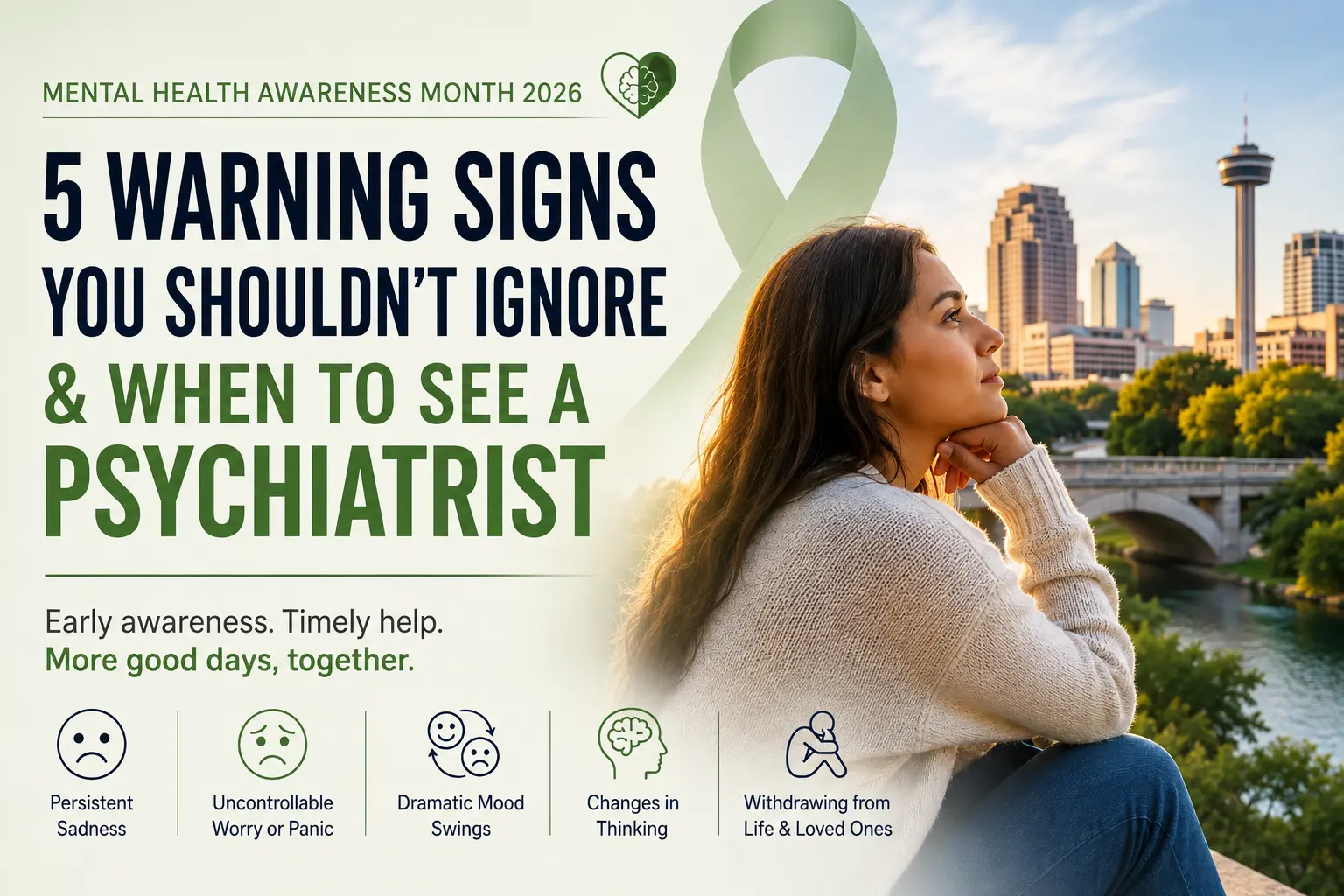
Most people do not realize they are struggling until the symptoms become too loud to ignore. You push through the exhaustion, chalk the anxiety up to a busy week, or tell yourself the sadness will pass. But sometimes, what feels like ordinary stress is your mind signaling that it needs professional support.
May is Mental Health Awareness Month, and this year the message is clear: recognizing the warning signs of mental illness early can change the course of your life. If you or someone you love has been experiencing shifts in mood, behavior, or thinking, this guide is for you.
Why Mental Health Awareness Month Matters More Than Ever in 2026
Mental Health Awareness Month has been observed every May since 1949. But in 2026, the urgency behind it feels different.
This year, Mental Health America’s theme is “More Good Days, Together,” a reminder that mental wellness is not just a personal journey but a community one. Modern life is piling new layers of pressure on an already heavy load. Economic uncertainty, post-pandemic grief, social media overload, and workplace burnout are pushing more people past their breaking point across the country.
In San Antonio and across Texas, the demand for psychiatric care has never been higher. Understanding mental health warning signs early is one of the most powerful steps you can take for yourself and the people you care about most.
5 Mental Health Warning Signs You Should Never Ignore
Mental health conditions rarely appear overnight. They tend to develop gradually, and many people dismiss early warning signs as stress, bad moods, or just going through a phase. Here are 5 signs worth taking seriously.
1. Persistent Sadness, Hopelessness, or Emotional Numbness
Feeling sad after a hard week is completely normal. But when that sadness stretches into weeks, or you begin feeling like things will never get better, it may be one of the most critical warning signs of mental illness to pay attention to.
Clinical depression goes well beyond feeling down. It can show up as a complete loss of interest in things you once enjoyed, an inability to feel pleasure (a condition called anhedonia), persistent low energy, and a sense of hopelessness that does not lift even when your circumstances improve.
Many people with depression do not feel “sad” in the traditional sense. Instead, they describe a kind of emotional numbness, going through the motions of daily life without feeling present. If this sounds familiar, a psychiatric evaluation can help identify whether what you are experiencing is clinical depression and what the right treatment looks like for you.
Signs to watch for:
- Sadness or emptiness lasting more than two weeks
- Loss of interest in hobbies, relationships, or work
- Fatigue that does not improve with rest
- Feelings of worthlessness or excessive guilt
2. Uncontrollable Worry or Sudden Panic That Disrupts Daily Life
Everyone worries. But when worry becomes constant, overwhelming, and impossible to turn off, it crosses into clinical anxiety, one of the most widespread mental health symptoms seen by psychiatrists today.
If you find yourself Googling “do I have a mental illness or am I overreacting,” that question itself may be a sign worth exploring with a professional. Generalized Anxiety Disorder (GAD) causes excessive, uncontrollable worry about everyday situations, often accompanied by physical symptoms like a racing heart, chest tightness, muscle tension, and difficulty sleeping.
Panic attacks are another red flag. These sudden episodes of intense fear can feel like a heart attack, complete with shortness of breath, dizziness, and a sense that something terrible is about to happen. If panic or worry is affecting your ability to work, maintain relationships, or leave the house, speaking with a psychiatrist is the right move.
Signs to watch for:
- Constant, hard-to-control worry about everyday situations
- Panic attacks or sudden episodes of intense fear
- Physical symptoms like rapid heartbeat, sweating, or trembling
- Avoiding situations because of anticipated anxiety
3. Dramatic Mood Swings or Periods of Unusually High Energy Followed by Crashes
Not all mood changes are signs of mental instability, but when they are severe, cyclical, and disrupting your relationships or responsibilities, they deserve serious attention.
Bipolar Disorder is one of the most misunderstood mental health conditions. It is characterized by alternating episodes of mania, which are periods of unusually elevated mood, decreased need for sleep, impulsive decision-making, and heightened energy, and depression. These cycles can last days, weeks, or even months. Many people do not recognize the pattern until it has caused real damage to their careers or personal lives.
What makes Bipolar Disorder especially difficult to self-identify is that the manic phase can feel good at first. Increased energy and confidence can seem like a welcome change, particularly after a depressive period. But these episodes tend to escalate and lead to decisions with serious consequences.
Signs to watch for:
- Periods of extremely high energy or very little need for sleep
- Impulsive behavior followed by periods of deep depression
- Rapid mood changes that shift within the same day or week
- Racing thoughts that feel impossible to slow down
4. Intrusive Thoughts, Compulsive Behaviors, or an Inability to Stop Ruminating
Most people joke about being “a little OCD” when they straighten a crooked picture frame or check the stove twice before leaving home. But clinical Obsessive-Compulsive Disorder is something very different, and it is one of the most commonly misrepresented mental health conditions in popular culture.
OCD involves intrusive, unwanted thoughts that cause intense distress, paired with compulsive behaviors or mental rituals performed to temporarily relieve that distress. The thoughts feel outside of one’s control, often disturbing, and they cannot simply be dismissed through willpower. Compulsions such as checking, counting, repeating, or avoiding provide short-term relief but reinforce the cycle over time.
OCD can also appear without visible rituals. A form known as “Pure O” involves primarily intrusive thoughts and mental rumination without obvious outward behavior, making it harder to recognize. If you find yourself stuck in loops of distressing thoughts that interfere with your daily functioning, these may be mental breakdown signs that call for a professional evaluation. OCD is a treatable psychiatric condition, not a personality trait or quirk.
Signs to watch for:
Recurring, unwanted thoughts that cause significant anxiety
Repetitive behaviors or routines you feel compelled to perform
Intense distress when rituals or routines are interrupted
Spending more than one hour each day on obsessive thoughts or compulsions
5. Withdrawing From People, Losing Interest in Life, or Feeling Detached From Reality
Social withdrawal is one of the most overlooked mental health warning signs, partly because it is so easy to miss from the outside. Someone can appear completely fine on the surface while quietly disconnecting from everything and everyone they care about.
This is actually a strong example of a non-observable warning sign for a mental health condition in someone else. A friend or family member might seem calm, composed, and even productive at work, while internally experiencing feelings of disconnection, emotional flatness, or a growing sense that life holds no meaning.
Withdrawing from people can be a sign of several different conditions, including depression, severe anxiety, early-stage psychosis, or other psychiatric conditions that affect self-esteem and social functioning. According to SAMHSA, recognizing these signs early, especially before they become a crisis, is directly linked to better treatment outcomes. If someone close to you has been canceling plans consistently, going quiet on social media, or expressing that they feel like a burden to others, take it seriously.
Signs to watch for:
- Pulling away from friends, family, or social activities without explanation
- Expressing feelings of emptiness, detachment, or unreality
- Feeling like a burden to others or that others would be better off without you
- A growing sense that life has become meaningless or joyless
Not sure if what you are experiencing is a warning sign? Our board-certified psychiatrists at Psychiatry of SA serve Castle Hills, New Braunfels, Southside San Antonio, and El Paso. Book a confidential evaluation today. Most insurance plans are accepted. Book Your Appointment
When Should You See a Psychiatrist?
You should see a psychiatrist when your symptoms last more than two weeks, interfere with daily work or relationships, involve thoughts of self-harm, or have not improved with self-care alone. A psychiatrist can evaluate, diagnose, and create a personalized treatment plan that may include medication management and ongoing psychiatric support.
Here are specific situations that call for a professional psychiatric evaluation:
- Your symptoms have lasted two weeks or more without any sign of improvement
- Daily functioning is affected, including your ability to work, sleep, eat, or maintain relationships
- You are having thoughts of self-harm or suicide — if this is the case, call or text 988 immediately
- Self-help strategies have not worked, including exercise, rest, or lifestyle adjustments
- Your primary care doctor has not been able to identify the cause of your physical or emotional symptoms
- Someone in your life has expressed concern about changes in your mood, behavior, or thinking.
One important distinction worth knowing: a psychiatrist is a medical doctor who can diagnose mental health conditions, prescribe medication, and provide comprehensive psychiatric evaluations. If your symptoms may require medication as part of your treatment, a psychiatrist is the right provider to contact.
Telehealth appointments are also available at Psychiatry of SA for patients across Texas, making it easier than ever to access expert care without leaving home.
What Happens at Your First Psychiatric Appointment?
One of the biggest reasons people delay care is that they simply do not know what to expect. The process is far more straightforward than most people anticipate.
At your first appointment with Psychiatry of SA, a board-certified psychiatrist will review your personal and family medical history, ask about your current symptoms, and discuss how those symptoms are affecting your daily life. This initial psychiatric evaluation gives your provider a full picture before any treatment plan is recommended.
You will not be judged. Everything you share is completely confidential. Depending on your situation, your provider may recommend medication management, follow-up appointments, or a combination of approaches. There is no single treatment that works for everyone, and your care plan will be built around your specific needs and goals. Telehealth appointments are available and just as thorough as in-person visits.
Mental Health Warning Signs in Children and Teens: A Note for Parents
May 7, 2026 marks National Children’s Mental Health Awareness Day, and the numbers behind it are difficult to look away from. According to SAMHSA, 1 in 5 young people in the United States has a mental health condition, yet fewer than half ever receive the care they need.
In children and teenagers, mental health warning signs often look quite different from those in adults. Watch for declining grades or school refusal, increased irritability or emotional outbursts, physical complaints like stomachaches or headaches without a clear medical cause, changes in sleep or appetite, and pulling away from friends or family without explanation.
If you are concerned about your child’s emotional or behavioral health, a psychiatric evaluation with a compassionate professional can provide clarity and a clear path forward. Early support makes a meaningful difference.
Expert Psychiatric Care in San Antonio, Castle Hills, New Braunfels, and El Paso
At Psychiatry of SA, our board-certified psychiatrists provide comprehensive care for a wide range of mental health conditions, including depression, generalized anxiety disorder, bipolar disorder, ADHD, OCD, schizophrenia, self-esteem challenges, and stress-related conditions. We treat the whole person, not just the diagnosis.
We are currently accepting new patients at all four of our Texas locations: Castle Hills, Southside San Antonio, New Braunfels, and El Paso. Telehealth appointments are also available for patients across Texas who prefer to receive care from the comfort of home.
We accept most major insurance plans, including Blue Cross Blue Shield, Aetna, Cigna, United Healthcare, WellCare, Medicare, and more.
FAQs:
Q1: What are the early warning signs of mental illness in adults?
The early warning signs of mental illness in adults include persistent sadness or mood changes lasting more than two weeks, excessive worry or panic that disrupts daily functioning, dramatic mood swings, intrusive or unwanted thoughts, social withdrawal, and difficulty completing routine tasks. If you notice several of these symptoms in yourself or someone you care about, speaking with a psychiatrist near you is the recommended next step.
Q2: How do I know if I need a psychiatrist or a therapist?
A psychiatrist is a medical doctor who can diagnose mental health conditions and prescribe medication. A therapist provides talk-based support but cannot prescribe medication. If your mental health symptoms are severe, have not improved with counseling alone, or may require medication management as part of your treatment, a psychiatrist is the appropriate provider to contact. Many patients benefit from seeing both.
Q3: Can mental health warning signs appear physically?
Yes. Many mental health conditions have physical symptoms. Anxiety can cause a racing heart, chest tightness, and trouble sleeping. Depression often presents as fatigue, changes in appetite, and unexplained body pain. OCD can cause physical exhaustion from repetitive rituals. If your doctor cannot find a medical explanation for your physical symptoms, a psychiatric evaluation may be a helpful next step.
Q4: Does Psychiatry of SA accept insurance for mental health care?
Yes. Psychiatry of SA accepts most major insurance plans, including Blue Cross Blue Shield, Aetna, Cigna, United Healthcare, WellCare, Devoted Health, Clover Health, and Medicare. Cash pay options are also available. Contact our office at 210-742-6551 to verify your coverage before scheduling your first appointment.